
Why Are Peptides Lyophilized?
Understanding Freeze-Drying in Research Peptides Why are peptides lyophilized? This guide explains how freeze-drying protects peptide stability, structure, and usability in research settings. Peptides are extremely fragile molecules. Their structure,
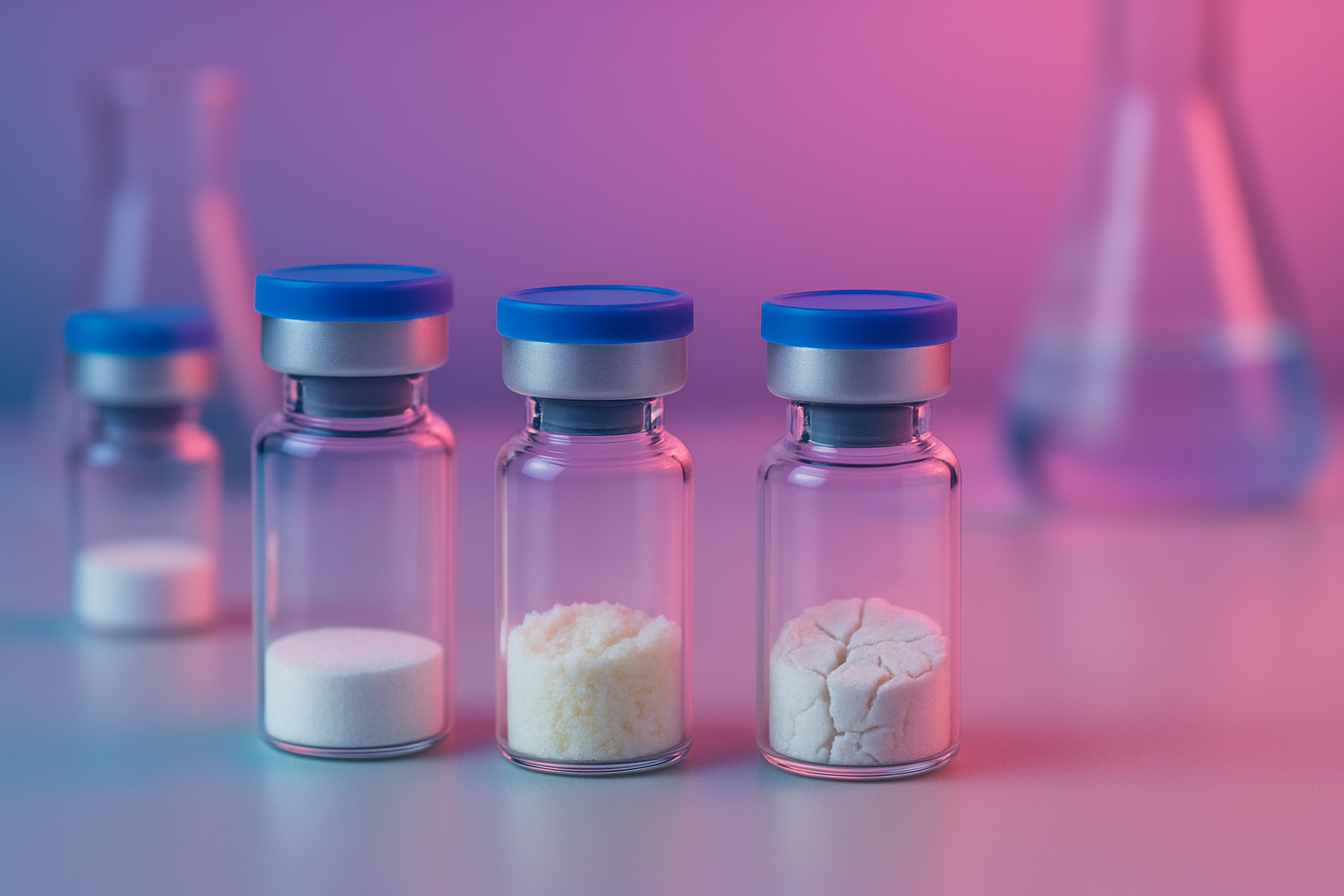
Table of Contents
Understanding Freeze-Drying in Research Peptides
Why are peptides lyophilized? This guide explains how freeze-drying protects peptide stability, structure, and usability in research settings.
Peptides are extremely fragile molecules. Their structure, stability, and effectiveness in research
can change quickly when exposed to heat, moisture, or repeated temperature fluctuations.
Because of this sensitivity, most peptides do not ship or store well in liquid form.
That’s where lyophilization comes in.
Lyophilization — also known as freeze-drying — is one of the most common methods used to
preserve peptide integrity from the laboratory to the end researcher. If you’ve ever opened a
peptide vial and seen a fluffy white “puck,” powder, or even a cracked little disk at the bottom,
that’s the result of this process.
In this article, we’ll break down what lyophilization is, why it’s used, and what researchers
should know about it.
What Is Lyophilization?
Lyophilization is a dehydration process that removes water from a substance while it is frozen.
Rather than evaporating liquid through heat, which can damage or denature delicate molecules,
freeze-drying uses:
- Freezing,
- Vacuum pressure, and
- Sublimation (solid → vapor)
This method protects the three-dimensional shape of the peptide and helps maintain its overall
structure.
Why Peptides Are Lyophilized
Stability During Shipping
Peptides can degrade quickly in liquid form. Temperature swings during shipment — even short
ones — can cause breakdown or reduced purity.
Freeze-drying removes water and makes the peptide much more resistant to transport conditions.
Longer Shelf Life
Lyophilized peptides typically have a far longer shelf life compared to liquid peptides.
Without water, there is far less risk of:
- Hydrolysis
- Bacterial growth
- Molecular breakdown
This is why most research peptides arrive dry and airtight.
Protects Peptide Structure
Peptides are chains of amino acids folded in a specific shape. Heat or moisture can disrupt that
shape.
Lyophilization maintains:
- Proper folding
- Bond stability
- Overall integrity
Even small deviations can affect how a peptide behaves in research settings, so protecting its
shape is essential.
Easier Storage
Freeze-dried peptides are:
- Lightweight
- Stable
- Easy to store at cooler temperatures
Most researchers keep lyophilized peptides in a cold, dry environment until ready for
experimentation.
Flexibility for Research Use
By sending peptides in lyophilized form, laboratories allow researchers to:
- Choose their preferred solvent
- Control concentration
- Maintain precision for their specific experiment
Different studies may use different solvents or dilutions, so starting dry provides maximum
flexibility.
Why Lyophilized Peptides Sometimes Look “Different”
One important note:
Lyophilized peptide appearance can vary — and the differences rarely indicate poor quality.
Common variations include:
- Off-center pucks
- Cracked or shrunken powder
- Fluffy or crystal-like texture
- Thin coating around the bottom of the vial
- Slight color differences depending on peptide composition
These variations happen naturally during the freeze-drying process.
The appearance depends on the peptide’s:
- Molecular structure
- Amino acid sequence
- Amount in the vial
- Lyophilization technique used
Researchers usually focus on purity and documentation rather than how the puck looks.
Final Thoughts
Lyophilization is used because it keeps peptides stable, protected, and ready for precise research.
By removing moisture in a controlled freeze-drying process, the peptide can maintain structural
integrity through manufacturing, transport, and storage.
Once a researcher is ready to begin work, the peptide can be reconstituted using the appropriate
solvent for their specific study.
FAQ: Why Are Peptides Lyophilized?
Why do researchers use lyophilized peptides?
Freeze-drying helps maintain peptide stability during shipping and storage, reducing degradation from moisture and temperature changes.
Does lyophilization change peptide quality?
No — when performed correctly, lyophilization preserves the peptide’s original structure and makes it easier to reconstitute for laboratory testing.
Want a beginner-friendly overview? Read our What Are Peptides? guide.
Compliance Reminder
Peptides sold by Peptide Basix are for laboratory research only.
Not for human use.
This article summarizes publicly available information for educational purposes only.